Hardware & components
Custom bag hardware: what to specify and where it fails
24 November 2026 · Alice Bao · 9 min read
Hardware almost never fails because the design was wrong. It fails because the plating was not specified, because the second batch came off a different bath, or because nobody wrote a testable number into the spec sheet. Three lines close most of that gap:
| Write this into the spec | Example value | What it prevents |
|---|---|---|
| Salt spray hours + method | 48 h, ISO 9227 / ASTM B117 | Rust blooming in the container or on the shelf |
| Nickel release (EU-destined goods) | EN 1811 on EN 12472 worn specimen, ≤ 0.5 µg/cm²/week | Retail rejection, Amazon delisting, customs sampling |
| Zipper brand, grade, slider type | YKK #5 nylon coil, auto-lock slider | A cheap slider failing on a named-brand tape |
Everything else is confirmed on a signed physical sample. A spec sheet that has never been matched against a physical reference is a wish, not a specification.
The mistake that shapes all the others
Buyers specify the bag and accept the hardware. The body fabric gets a Pantone number and a weight, the lining gets a name, the stitching gets a row count — and then the hardware section says "gold metal" and stops. That single phrase covers a zinc-alloy adjuster plated in a bright bath, the same adjuster in an antique finish with a lacquer top coat, and a brass part that costs four times as much. All three are "gold metal". They behave nothing alike in a container, and they do not look alike on a shelf next to each other.
Hardware is also the one component where the buyer usually has no reference of their own. Most brands can judge a fabric by touch. Very few can look at a D-ring and tell whether the plating will survive six weeks of humidity, or whether the nickel release rate will clear the European limit. That gap is where reorders go wrong, and it is why the specification work belongs in the sampling round, not the inspection round.
Plating: the substrate decides the ceiling
Plating performance is mostly a property of what sits underneath it. A 0.1 mm decorative layer cannot rescue a base metal that corrodes. The practical ranking for bag hardware:
| Substrate | Typical salt spray (neutral, ISO 9227 / ASTM B117) | Where it belongs |
|---|---|---|
| Zinc alloy (die-cast) | 24–48 h as plated; 48–72 h with thickened passivation and a sealer coat | The default for cost-controlled adjusters, D-rings, snap hooks, logo plates |
| Brass / copper alloy | Better than zinc alloy at the same coating weight; the stable choice for wet or marine use | Marine, outdoor, hardware that must stay bright |
| Steel / iron | The weakest of the three; corrosion reaches the core and shows as red rust | Only where load demands it and the part is painted or powder-coated |
| Stainless steel | No plating to fail, but higher cost and a different look | Marine, equipment cases, industrial bags |
Two finishes deserve their own warning. Antique brass and gunmetal are not a single plated layer: they are a bright plate, a darkened chemical layer, a relief rub to expose highlights, and a lacquer seal. That lacquer is the only thing holding the colour, so it is also the first thing to wear at the contact points. Expect the antique look to change where the bag is handled most — this is normal, but it must be agreed in advance, because a buyer who expected a uniform finish will read it as a defect.
PVD coatings sit at the other end. They are applied in a vacuum, bond at the molecular level rather than sitting on top, and hold colour far better under abrasion. They cost more and are usually reserved for hardware that a brand wants to market as premium.
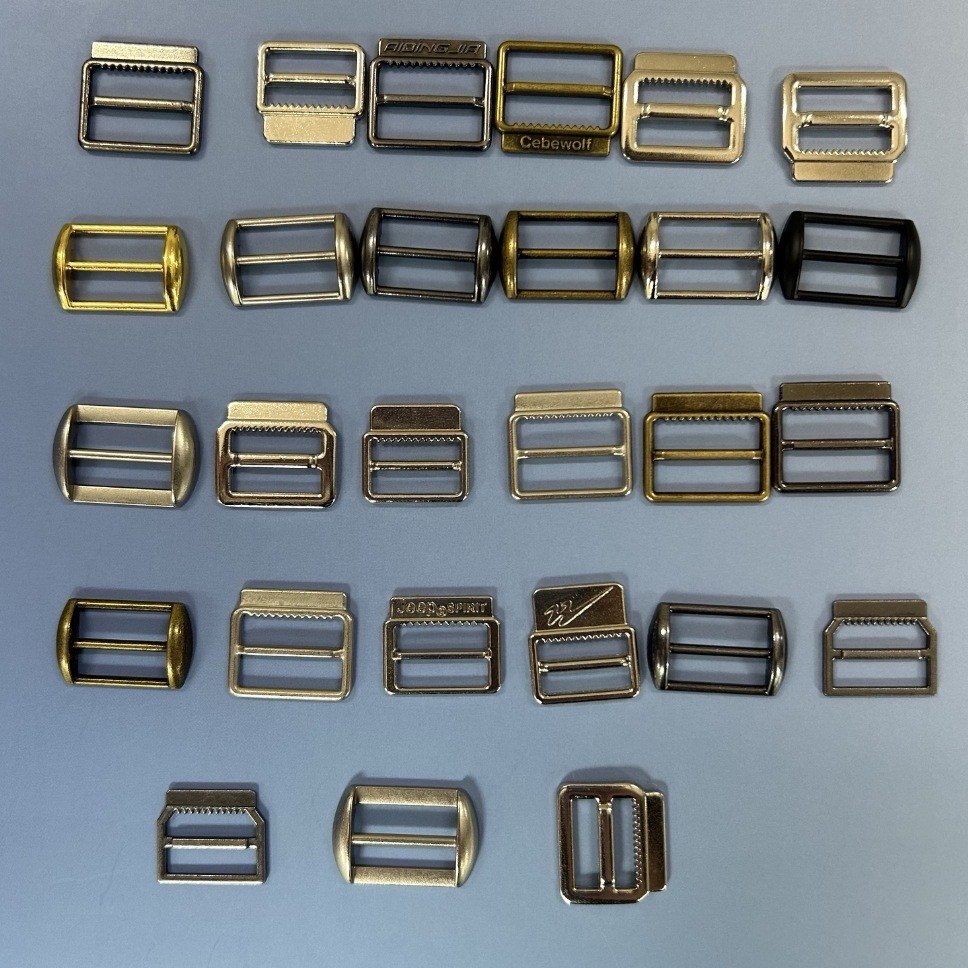
Zippers: the slider fails first
A zipper is three parts with three failure profiles. The tape is almost never the problem. The chain — the teeth — fails by losing alignment after the bag is overstuffed. The slider fails by losing its spring tension, which is what produces the split that runs open behind the pull.
| Grade | Where it goes | Note |
|---|---|---|
| #3 | Inner pockets, small pouches, cosmetic bags | Cheap and adequate; do not put it on a main opening |
| #5 | The bag default — main compartments, laptop bags, totes | Where most of the volume sits; the grade to standardise on |
| #8 / #10 | Luggage, expedition packs, heavy load openings | Weight and cost climb faster than the benefit below this use case |
| Metal vs nylon coil vs resin | Metal for look and durability on exposed openings; coil for flexibility around curves; resin for colour matching | Metal teeth on a tight curve is a design error, not a material choice |
On brand: YKK is the reference, SBS and the tier-one Chinese makers are the volume reality. A good domestic coil zipper on a bag that opens twice a day will outlive the bag. The premium for a named brand earns its place when the zipper sits on a heavy opening, when the tape runs around a sharp corner, or when your own spec sheet needs a named component. If you do specify YKK, specify the slider as well — a branded tape with a no-name auto-lock slider is a branded tape with a weak point.
The numbers worth writing down: reciprocating durability is tested under EN 16732 or ASTM D2061, with 5,000 cycles as a common floor for leather goods and higher for premium handbags. Slider pulling force is usually specified at or below 3 N for a smooth run. Both are cheap to test and both catch a bad slider before it reaches a customer.
Buckles: POM is not PP, and winter finds out
Two plastic buckles can look identical, weigh the same on a spec sheet and be completely different materials. POM (acetal) is the engineering default: high stiffness, low friction at the latch, and it holds impact strength well below freezing. PP is the cost option: cheaper, lighter, softer, and noticeably brittle in cold weather. A PP buckle that passes a drop test in a Shenzhen workshop at 25 °C can crack on a ski slope at −10 °C, and nothing in the sampling photos will tell you which material you have.
If the bag ships to a cold market, write the polymer into the spec and ask for a cold-impact statement. If the answer is vague, ask for the material designation — a supplier who cannot name the polymer is selling a buckle, not a component.
The other half of buckle selection is the webbing interface. A 25 mm ladderlock on 25 mm webbing is correct; on 20 mm webbing it slips under load no matter how good the buckle is. Match the hardware width to the webbing width exactly, and test the slip under load rather than by hand.
Load-bearing points: the sewing gives way before the metal
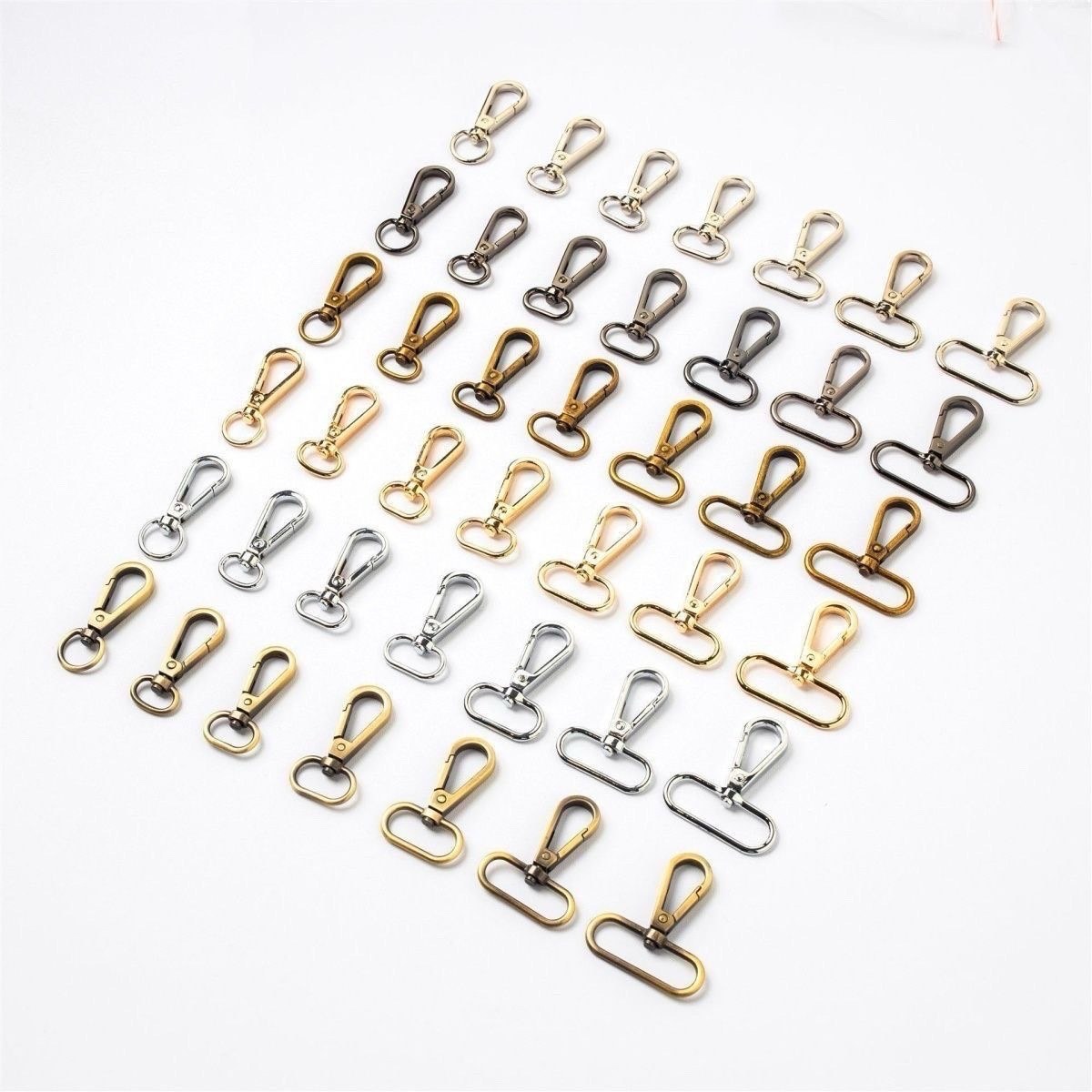
D-rings, snap hooks, strap ends and handle anchors rarely break. They tear out — the webbing or the seam around them fails first, which means the pull test has to cover the assembly, not just the part. A hardware supplier who quotes a D-ring break strength is answering a different question from the one that matters.
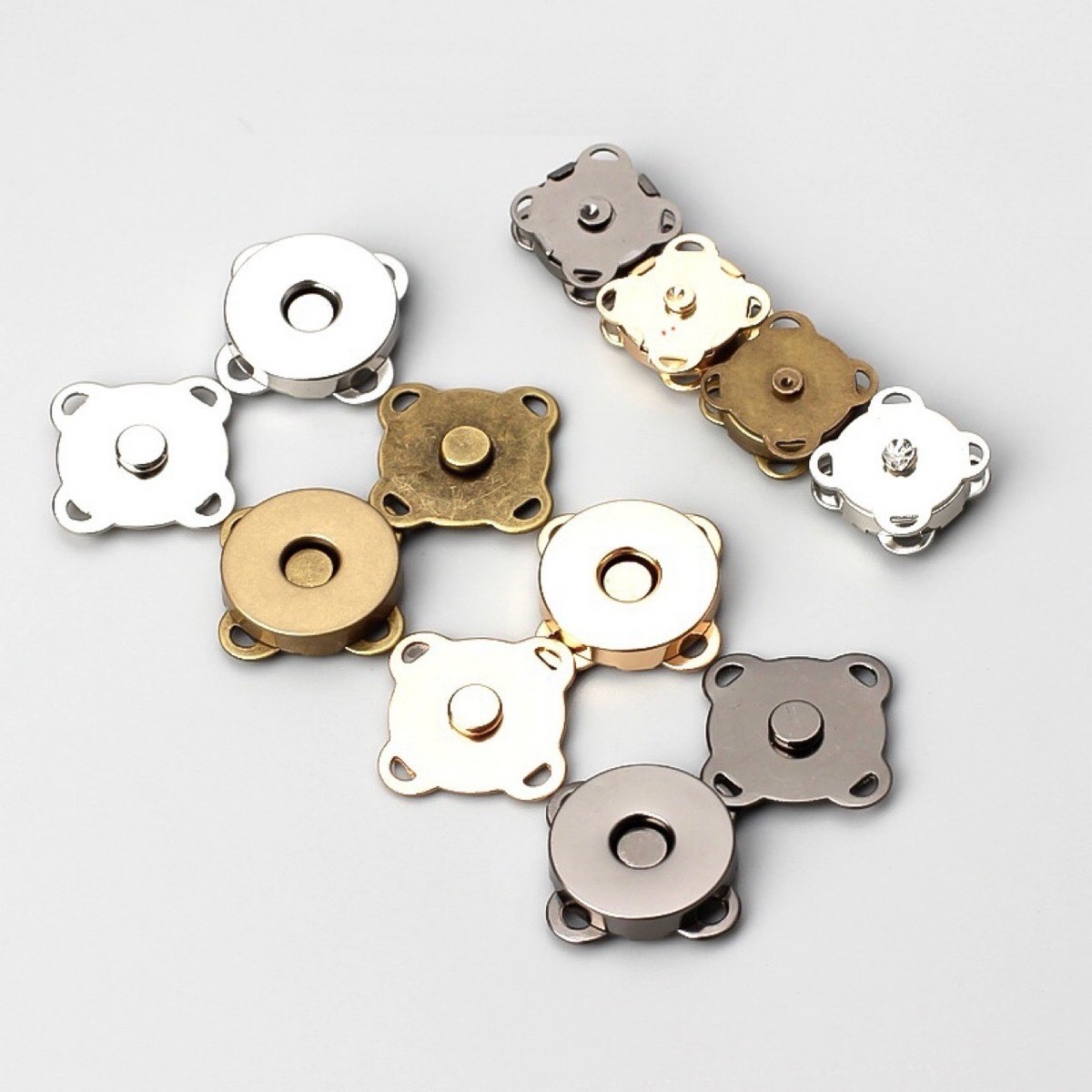
For anything that carries weight — shoulder straps, top handles, luggage anchors — ask for the pull figure in newtons on the assembled anchor, and ask how the test was fixtured. A number without a fixture description cannot be compared with another supplier's number. On magnetic snaps the relevant figure is holding force, which scales with diameter: 14–18 mm covers a handbag flap, 20 mm and up is where heavy flaps and briefcase fronts belong.
Salt spray: hours and method, or it is not a spec
Neutral salt spray is the standard accelerated test for plated bag hardware, and it is the single most useful line in a hardware specification. The method is fixed: 5% sodium chloride solution at 35 °C, pH 6.5–7.2, with the specimen angled 15–30° from vertical. ISO 9227 is the European reference, ASTM B117 the North American one, GB/T 10125 the Chinese equivalent. Any of them is acceptable — what is not acceptable is a report that names hours without naming the method, because the numbers are not comparable across setups.
| Where the bag is sold / how it travels | Hours to specify | Reason |
|---|---|---|
| Domestic, dry climate, short distribution | 24 h | Enough to catch a bath that is badly out of control |
| Export by sea, general retail | 48 h | Four to six weeks in a container with condensation on cold metal |
| Coastal markets, outdoor, workwear, marine | 72 h and above | Salt load in the air, not just in transit |
| Premium leather goods (zippers) | 72 h | Industry practice for handbag-grade zipper hardware |
Read the failure, not just the pass. White rust is corrosion of the plating itself and means the coating is giving up. Red rust is corrosion of the base metal and means the coating has already failed through. White rust at the specified hour is a warning; red rust is a rejection. A report that shows photographs of the specimen is worth more than one that shows a table of pass marks.
One trap: testing only a fresh sample. Plating fails where it is rubbed, and a 48-hour result on an untouched part says nothing about the same part after a year of use. If the buyer's market is strict, ask for abrasion before the salt spray, which is the same logic EN 12472 applies to nickel release.
Nickel release: the number you cannot argue with
For anything sold into the European Union, bag hardware that touches skin falls under REACH Annex XVII entry 27. The regulation limits release, not content: 0.5 µg/cm²/week for articles in prolonged skin contact — which includes zipper pulls, buckles, D-rings and adjusters on a bag carried against the body — and 0.2 µg/cm²/week for pierced parts. The test is EN 1811, and for plated articles the current standard pairs it with EN 12472, which simulates two years of wear before the release measurement is taken.
The mechanics matter because they explain the most common failure. A specimen sits in artificial sweat at pH 6.5 and 30 °C for 168 hours, and the liquor is then measured by ICP-MS. Nickel sitting under a decorative top coat is invisible to that test right up until the coat thins — and then the same part, from the same supplier, from the same drawing, fails. This is why a "nickel free" claim on a plating certificate proves nothing on its own, and why an XRF reading of surface content is not a substitute for an EN 1811 release result. XRF measures what is there; EN 1811 measures what comes off.
Practical consequence for a bag order: ask for the EN 1811 report on the worn specimen (EN 12472 pre-treatment), per part family rather than per order, and re-confirm it whenever the plating supplier changes. A report reused across different plating processes will not survive a customs sample or a marketplace review.
Why the second order is where hardware goes wrong
First orders usually arrive correct, because everyone is watching the sample. The failure shows up on the reorder, and it comes from one of four places:
Plating colour drift. Colour is a bath outcome. Between two plating runs the chemistry ages, the current density shifts, and the lacquer thickness changes the final tone. Two shipments of "light gold" can sit visibly apart on the same shelf.
Tool wear. Die-cast hardware comes out of a mould that wears. After tens of thousands of shots the parting line flashes, edges round off, and the part that was crisp in the sample looks soft in the reorder. Nobody changed the drawing; the tool aged.
Upstream substitution. The hardware factory changes its plating subcontractor, or the zipper supplier changes tape mill, and the assembly is nominally identical but behaves differently.
Sample memory loss. The signed sample exists but nobody re-checks the new batch against it, because the specification was written in an email rather than a document with a chip attached.
The controls that work are unglamorous: a signed colour chip per finish held by both sides, a sealed reference sample per hardware family, a salt spray report per batch rather than per year, and a written rule that any change of plating or component supplier triggers a re-approval. On our side that means the chip and the sealed sample travel with the order file, and a reorder is matched against them before the goods are packed, not after they land.
What to ask before you accept the quotation
Six questions separate a hardware quote you can hold a supplier to from one you cannot:
| Ask | Good answer | Answer that should worry you |
|---|---|---|
| Is hardware a separate cost line? | Yes, with finish and grade named | A single blended price "including accessories" |
| What salt spray standard and hours? | ISO 9227 or ASTM B117, hours stated, report per batch | "Our hardware is good quality" |
| Which zipper, which slider? | Brand, grade, slider type | "Standard zipper" |
| Which polymer for the buckles? | POM, with cold-impact statement if relevant | Silence, or "strong plastic" |
| Who owns the die-cast tooling? | Stated tooling cost and ownership, usually buyer-paid for custom shapes | Tooling folded invisibly into unit price |
| What is the MOQ to change hardware only? | A number per part, separate from the bag MOQ | "Same as the bag" |
That last one matters more than it looks. Changing a finish or a buckle on a running style is often the cheapest way to refresh a line for a new season, and it is only cheap if the hardware MOQ is quoted separately from the bag MOQ. Standard bag MOQ is 1,000 pcs per style and colour, with 500 and 300 tiers available at a premium — but a hardware change on an existing style is a different conversation, and worth asking about explicitly.
The hardware block of an inspection checklist
Hardware checks are fast and objective, which makes them easy to leave out and easy to defend once they are in. The block:
| Check | Method | Reject condition |
|---|---|---|
| Colour against chip | Visual, daylight, same batch side by side | Visible tone shift between pieces in one carton |
| Salt spray report present | Document check, batch-matched | Report dated to an earlier order, or no method named |
| Zipper reciprocation | EN 16732 / ASTM D2061, 5,000 cycles | Split, tooth loss, slider spring failure |
| Slider pull force | Spring gauge on the run | Above the specified figure, or binding at a curve |
| Anchor pull test | Assembled handle or strap anchor, fixture described | Seam or webbing failure below the specified load |
| Magnetic holding force | Spring gauge, perpendicular pull | Below the diameter-class figure agreed at sampling |
| Edges and burrs | Hand run plus visual | Any burr that can catch fabric or skin |
| Sharp plating defects | Visual, 10× on contact faces | Blistering, pitting, exposed substrate |
Two of those rows — the salt spray report and the colour chip — catch more real problems than the rest combined, because they are the two things that drift between orders while everything else stays on drawing.
Frequently asked
How many salt spray hours should I ask for on bag hardware?
Match the hours to where the bag will be sold and how it will travel, not to a round number. Domestic or dry-climate lines are commonly specified at 24 hours. Anything crossing an ocean spends four to six weeks inside a container with condensation on the metal, so 48 hours is the working figure for export. Outdoor, marine and workwear lines go to 72 hours and above. The test method matters as much as the hours: name ISO 9227 or ASTM B117 in the spec, because a report without the method line is not comparable to another supplier's.
Can hardware marked nickel-free still fail EN 1811?
Yes, and it happens often. REACH Annex XVII entry 27 limits nickel release, not nickel content: 0.5 micrograms per square centimetre per week for items in prolonged skin contact, 0.2 for pierced parts. A plated part can carry a nickel-bearing intermediate layer under a decorative top coat and still pass as long as the release rate stays under the limit. If the top coat is thin or the part is worn, the release rate climbs and the same goods fail. That is why the report you want is an EN 1811 result on an EN 12472 worn specimen, not an XRF reading of surface content.
Is YKK worth the premium over a domestic zipper?
It depends on what the zipper has to survive. On a bag that opens twice a day, a good domestic coil zipper from a tier-one Chinese maker performs for the life of the bag and costs a fraction of YKK. The premium earns its place where the zipper is the failure point: heavy loads, sharp corners in the tape run, wet or salty environments, or a brand that needs a named component in its own spec sheet. If you do pay for YKK, pay for the correct grade and slider, because a YKK tape with a cheap slider fails the same way as anything else.
Why does the same gold plating look different between two orders?
Because plating colour is a process outcome, not a pigment. Light gold, antique brass and gunmetal are produced by varying bath chemistry, current density and immersion time, then sealing with a lacquer whose thickness changes the final tone. Two plating lines running the same nominal colour will not match, and the same line will drift between baths. The only reliable control is a signed colour chip per finish held by both sides, plus a rule that the chip is re-signed whenever the plating supplier changes.
Should hardware be a separate line in the quotation?
Yes whenever the hardware is custom or branded. A single blended price hides the fact that hardware is where a reorder most often moves, because plating colour, zipper grade and buckle polymer are all separately sourced. A hardware line lets you see the delta when you change a finish, lets the factory quote a cheaper buckle without re-pricing the bag, and gives you something to compare when a second supplier quotes the same style.
Send us the style and the market. The hardware spec comes back with the finish, the test standard and the MOQ per part.
Standard bag MOQ is 1,000 pcs per style and colour; 500 and 300 tiers available at a premium. Sampling 7–15 days, mass production 35–50 days, T/T 30/70.
Related reading
- Bag materials guide — the hardware sample wall this article refers to, plus fabrics, logo methods and construction terms.
- Bag inspection checklist — where the hardware block sits inside a full pre-shipment inspection.
- What actually drives the cost of a bag — how hardware sits inside the unit price.
- Tech pack for bags — how to write the hardware section so it can be tested.
- Switching bag suppliers — what to carry over on hardware when you move a style.